Japanese ceramics and artisan made housewares
New Arrivals
-
VIEW ALL FROM THIS ARTIST
Copper Wine Cooler
20,000 yen ($129.35 USD) Artist : Yuichi Takemata- Dimensions: Dia 17cm x H 20cm
- Weight: 646g
- Material: Copper
- Product No: YT-200-1
- Made in Japan
VIEW ALL FROM THIS BRANDDofu Tissue Case - DK Navy
20,000 yen ($129.35 USD) Brand : Tsuchiya- Dimensions: W 28cm x D 15cm x H 3.5cm
- Weight: 61g
- Material: Linen / Cotton
- Product No: TY-51-4
- Made in Japan
VIEW ALL FROM THIS ARTISTTea Bowl
50,000 yen ($323.38 USD) Artist : Naotsugu Yoshida- Dimensions: W 11.5cm x D 11cm x H 8.7cm
- Weight: 337g
- Material: Porcelain
- Product No: NY-18-4
- Made in Japan
VIEW ALL FROM THIS BRANDKiso Hinoki Yuoke
15,000 yen ($97.01 USD) Brand : Azmaya- Dimensions: Dia 24.5cm x H 11.5cm
- Weight: 562g
- Material: Hinoki (Japanese Cypress)
- Product No: AZM-100
- Made in Japan
VIEW ALL FROM THIS BRANDKojin Broom - Denim
6,500 yen ($42.04 USD) Brand : Yonezawa Hoki Kobo- Dimensions: L 34cm x W 14cm
- Weight: 109g
- Material: Broom Corn
- Product No: S-80-5-5
- Made in Japan
-
VIEW ALL FROM THIS ARTIST
Tanka Vase (h33.5cm)
38,000 yen ($245.77 USD) Artist : Yoshimitsu Ishihara- Dimensions: W 5cm x D 4cm x H 33.5cm
- Weight: 310g
- Material: Ceramic
- Product No: YI-50-2
- Made in Japan
VIEW ALL FROM THIS ARTISTHako-Zen L
20,000 yen ($129.35 USD) Artist : Masaru Kawai- Dimensions: W 32cm x D 32cm x H 18cm
- Weight: 1200g
- Material: Cedar
- Product No: W-60-1-2
- Made in Japan
VIEW ALL FROM THIS ARTISTYohen Nanban Tsubo
60,000 yen ($388.06 USD) Artist : Aki Tamiya- Dimensions: Dia 18cm x H 23cm
- Weight: 2370g
- Material: Ceramic
- Product No: AT-002
- Made in Japan
VIEW ALL FROM THIS BRANDKittachi Mug S (100ml)
3,300 yen ($21.34 USD) Brand : Kittachi- Dimensions: Dia 4.5cm x H 9.5cm
- Weight: 106g
- Material: Ceramic
- Care: Not suitable for use in dishwashers and microwave ovens
- Product No: AL-5-1
- Made in Japan
VIEW ALL FROM THIS BRANDHanging Coil Burner
16,000 yen ($103.48 USD) Brand : Sゝゝ- Dimensions: Dia 15cm x H 3cm
- Weight: 620g
- Material: Iron
- Product No: T-37-1
- Made in Japan
-
VIEW ALL FROM THIS BRAND
CanvasTote Bag
27,000 yen ($174.63 USD) Brand : Paisano- Dimensions: W 55cm x D 15.5cm x H 38.5cm (incl handle 61.5cm)
- Weight: 685g
- Material: Canvas
- Product No: PAI-200-2
- Made in Japan
VIEW ALL FROM THIS BRANDHinoki Soap Stand
5,700 yen ($36.87 USD) Brand : Azmaya- Dimensions: W 30cm x D 11cm x H 4cm
- Weight: 175g
- Material: Kiso-hinoki (Japanese Cypress)
- Care: Stand to dry in a well ventilated area
- Product No: AZ-600-2
- Made in Japan
VIEW ALL FROM THIS BRANDCopper Nabe
70,000 yen ($452.73 USD) Brand : Fuukidou- Dimensions: W 33.5cm x D 25cm x H 15cm
- Weight: 2507g
- Material: Copper / Tin
- Product No: FU-042
- Made in Japan
VIEW ALL FROM THIS BRANDRock End
18,000 yen ($116.42 USD) Brand : AJI PROJECT- Dimensions: W 16.5cm x D 8cm x H 15cm
- Weight: 3713g
- Material: Stone
- Product No: AJI-40-F
- Made in Japan
VIEW ALL FROM THIS BRANDFull Apron (Black Herringbone )
22,500 yen ($145.52 USD) Brand : analogue+- Dimensions: L 100cm x W 81cm
- Weight: 350g
- Material: Linen
- Product No: F-15-2
- Made in Japan


News & Exhibitions
-
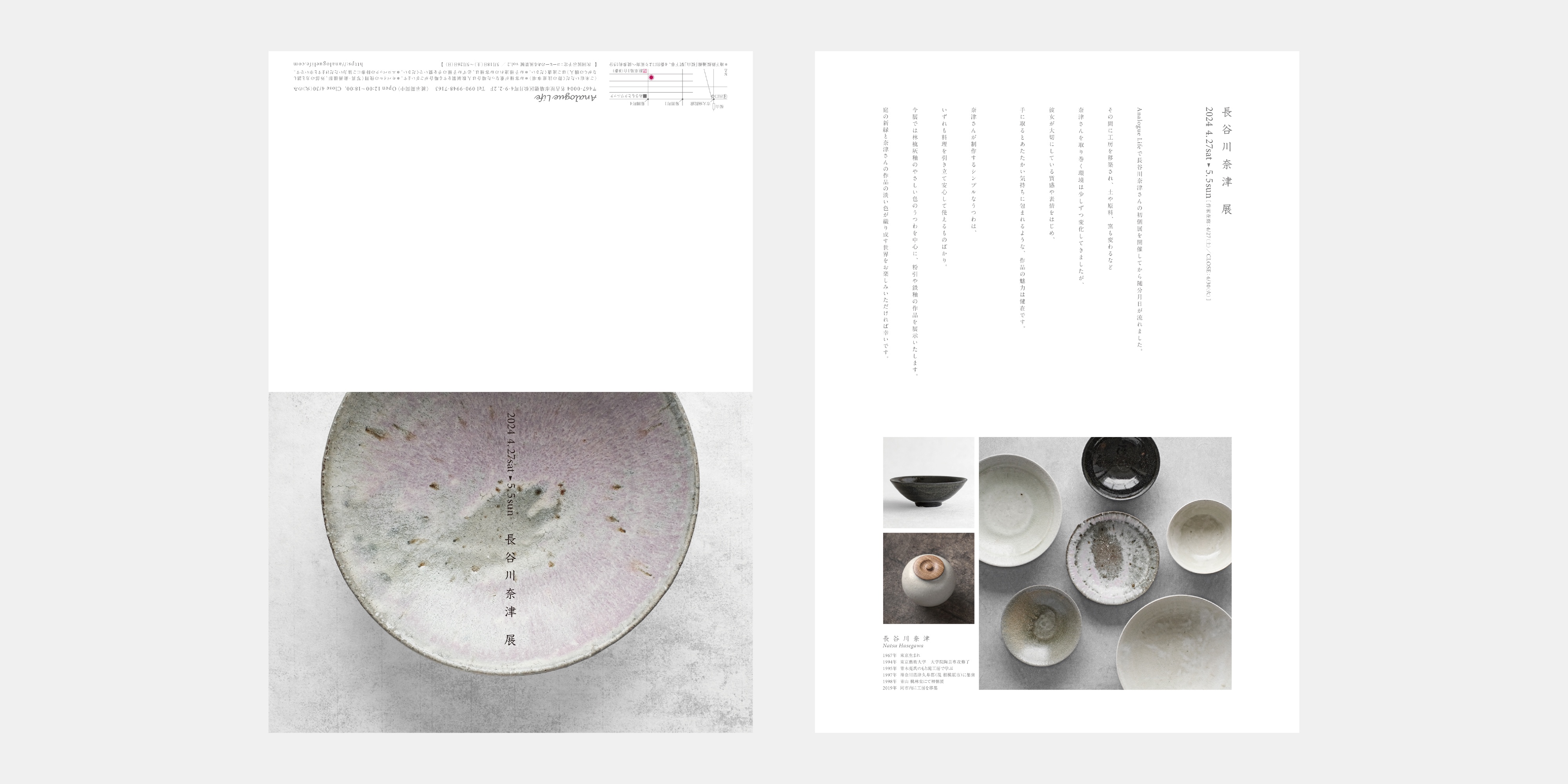
April 10, 2024 - Upcoming Exhibition - Natsu Hasegawa Exhibition
April 27th to May 5th
-
March 27, 2024 - Upcoming Exhibition - Hiroki Ooura Exhibition - Temporarily Postponed
The Hiroki Ooura exhibition, scheduled to open on April 6th (Saturday), has been temporarily postponed. We will inform of the rescheduled dates and details at a later time, Thank you for your understanding.
-
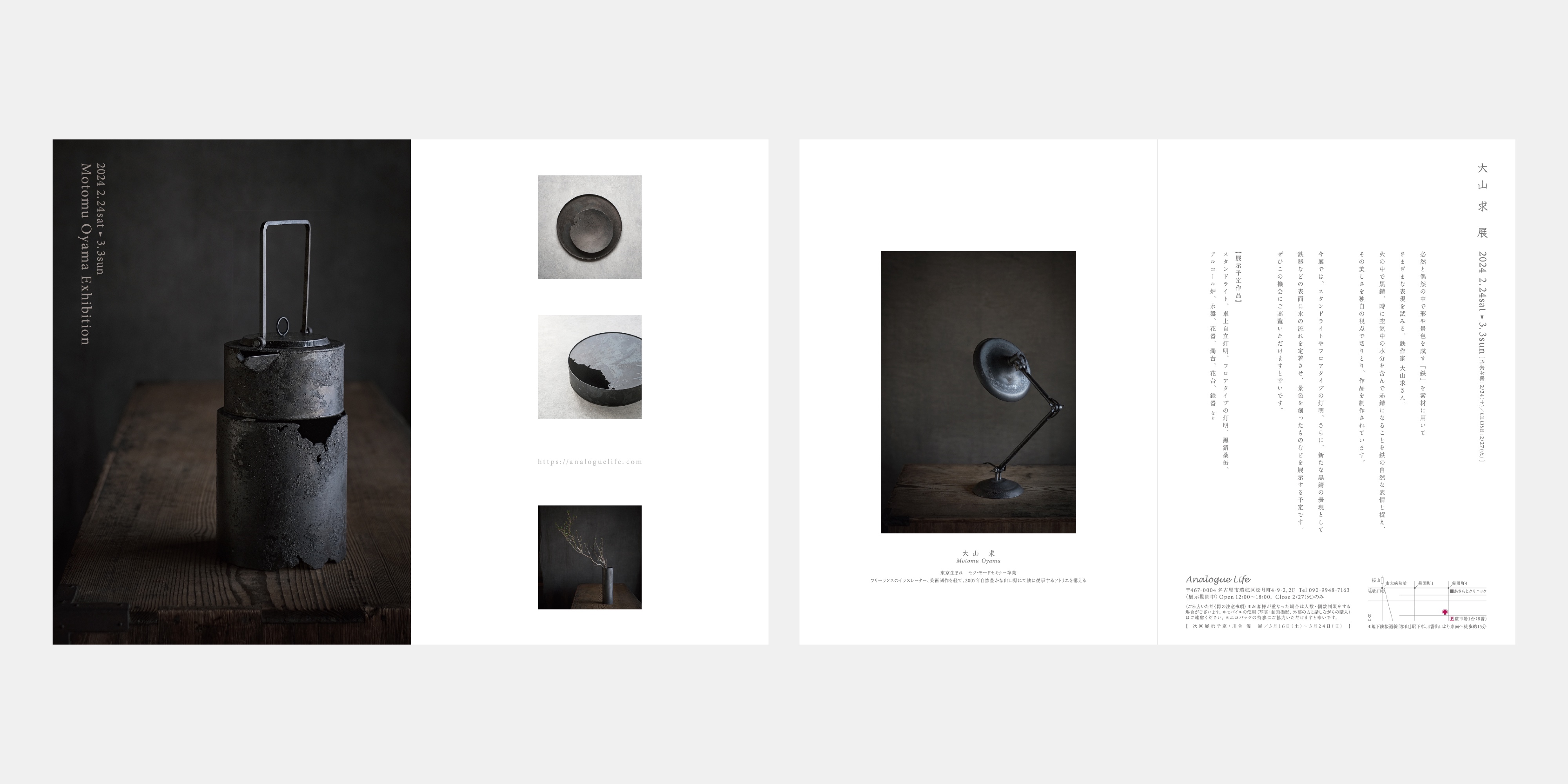
February 5, 2024 - Upcoming Exhibition - Motomu Oyama Exhibition
Motomu Oyama Exhibition - Feb 24th to Mar 3rd
Shop
-
Located on the 2nd floor of a beautiful Showa era house in Mizuho Ward, Analogue Life's Nagoya shop blends contemporary styling with Showa period architectural elements. Seperately the first floor of the building houses Tsukihiso, a gallery that has exhibitions of kimonos, ceramics, prints, and other works from the 10th to the 20th of each month.
Analogue Life:
2nd Floor, 4-9-2 Shogetsucho, Mizuhoku, Nagoya, 467-0004 Japan
TEL/FAX: +81 052 933 7262
Opening Hours: Wednesday to Saturday 12-6pm.
Exhibition Hours: During exhibitions we are open daily 12-6pm (closed Tuesdays).
Access: 10 minutes walk from Sakurayama Stn (Exit 4) on the Sakuradori line.
Nagoya Access: From Tokyo: 2hrs by Shinkansen / From Kyoto: 30min by Shinkansen

Subscribe to Our Newsletter
Sign up with your email address to get news and updates.